“One Book for Today’s and Future Generations of Maluku” – A Portrait of Education in Meu Hamlet, Central Maluku
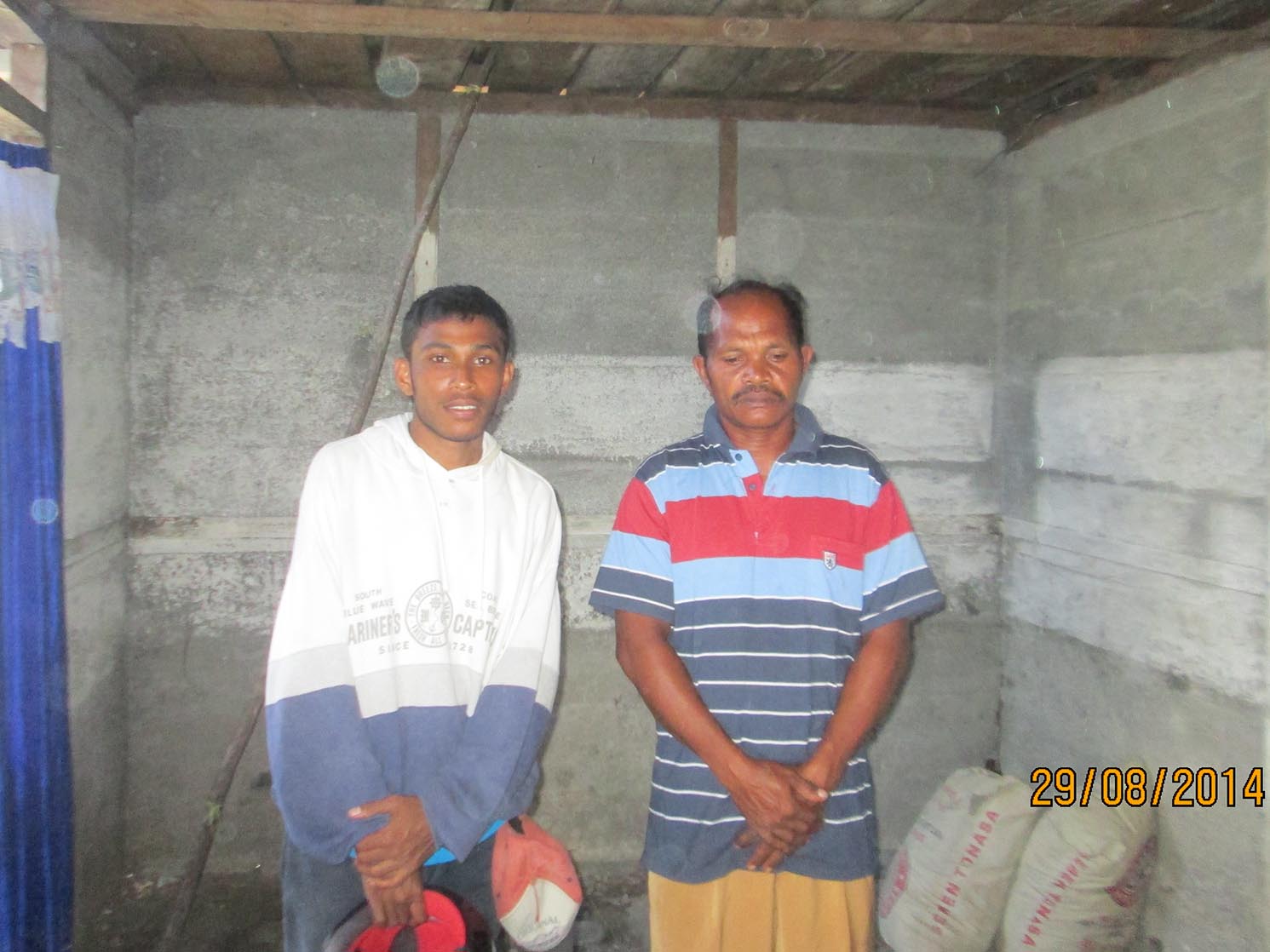
This is a fragment of the hope the author can describe in this article. Talking about education means talking about the rights of all Indonesian citizens. We should and should properly obtain our rights and carry out our obligations as citizens, without distinction of ethnicity, religion, or background, whether urban or rural.
The hope for good quality education, in the form of educational equipment, adequate school buildings with adequate classrooms, and the availability of supporting books for the teaching and learning process, is crucial. All of this supports the creation of a quality learning process and produces a generation capable of meeting future challenges, both for the nation and for themselves.
Education is often associated with the wheel of development. Good education will produce a good generation for this nation. Conversely, if education is not managed properly, human resource development will also be suboptimal and produce a generation that is less qualified to face future challenges. Article 31 paragraph (1) of the 1945 Constitution states that every citizen has the right to education. Article (2) states that every citizen is obliged to receive basic education, and the government is obliged to finance it. Furthermore, Article (4) states that the state prioritizes the education budget of at least twenty percent of the State Budget and Regional Budgets to meet the needs of national education.
This constitutional mandate clearly and in detail regulates educational needs, so the government is obligated to implement it to meet the need for quality education. We all know that the education budget continues to increase every year to support the quality and efficiency of education. In 2014, the government increased the education budget to boost the quality, access, and equity of education services with the aim of accelerating human resource development. In the 2014 State Budget (APBN), the education budget reached IDR 371.2 trillion, a 7.5 percent increase from the 2013 education budget of IDR 345.3 trillion.
However, in reality, there are still some children who do not receive a proper education. This is despite the government having allocated significant funds to improve the quality of education. Reality shows that the development of educational quality is not evenly distributed across the country. For some, education is easily accessible, but for others, it remains elusive, even a pipe dream. This is a reality that persists around us, including in Maluku Province.
In the reality of education in remote areas of the country, from Sabang to Merauke, many find inadequate educational conditions, both in terms of buildings, equipment, teaching and learning processes, and teaching staff. SD Inpres Lateri/Jau Meu Classroom/Trans Seram Road/Maluku Province/Central Maluku Regency/Amahai District/Tamilouw Village is a clear example of this educational situation. During the author’s visit to Meu Hamlet, approximately 15 kilometers from Tamilouw Village by land, the author observed that the road conditions were indeed slightly better than before, although they did not meet standards due to the lack of asphalt.
The school building used for teaching and learning is still very rudimentary and inadequate. The author concludes this because, firstly, the school only has three classrooms. Second, of the three classrooms, only one is suitable for teaching and learning activities. Third, facilities such as tables and chairs are inadequate. Fourth, the author questioned how and where textbooks are obtained to enhance the children’s reading skills, including those for simply consulting an atlas, as he experienced when he was in elementary school. The author’s visit coincided with a school holiday, so he was unable to witness the teaching and learning activities directly, but the conditions provided a sufficient picture of the situation.
The author conducted a brief interview with one of the students at the school. The student explained that teaching and learning processes are often conducted in a single classroom, sometimes involving students from grades 1 to 5. It’s easy to imagine how challenging it is for teachers to manage learning in such conditions. Furthermore, the school only serves up to grade 5. Students continuing to grade 6 must be transferred to a school in a neighboring hamlet, approximately one kilometer away. This situation is truly concerning for children, the nation’s future generation.
The author also conducted a brief interview with the Secretary of Meu Hamlet. The interview revealed that the school’s presence in this hamlet was a local community initiative. The number of teaching staff is very limited, around five teachers, consisting of civil servants and contract teachers.
The author did not inquire about the salaries of the teachers, especially the contract teachers. However, it is conceivable that with such a limited student population, their wages are certainly far from adequate. The author also inquired about the source of the textbooks used in the teaching and learning process. It turned out that most of the books were purchased independently by the teachers or received assistance from donors who care about education in the hamlet.
During the construction of SD Inpres Lateri/Kelas Jau Meu, a new building was indeed built to replace the old one. However, based on information obtained, the local community is unsure of the exact source of this construction funding. They sincerely hope for continued support, both from the private sector and the government, to ensure the sustainability and adequacy of this school’s facilities.
The educational realities the author encountered represent a snapshot of the state of education in this country, particularly in Maluku Province. The author believes that many other regions in Indonesia face similar, perhaps even more dire, conditions.
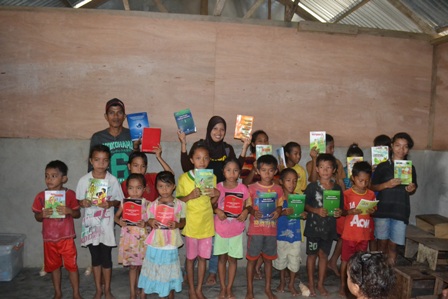
Based on this description, the author has a strong desire to participate in helping improve the quality of education, in accordance with his abilities. One form of initial contribution that is greatly needed is the provision of textbooks. Although school buildings are not yet adequate, the children’s enthusiasm for learning is extraordinary. They have aspirations and hopes for the future. To support all of this, books are a crucial necessity. From this thought was born the grand idea of ”One Book for Today’s and Future Generations of Maluku,” as an effort to support the quality of education and encourage children to continue their education to a higher level. We must not become a nation that merely continues to change the education system, while the quality of education remains stagnant and not enjoyed equally by all the nation’s children.
By:
Moh. Ramli Tomagola
Student of the Faculty of Law
Satya Wacana Christian University – Salatiga
“If not us, then who else? If not now, then when?”
Greetings from Smart Maluku.